Down But Not Done: What It Really Takes to Win a Relay Race From Behind

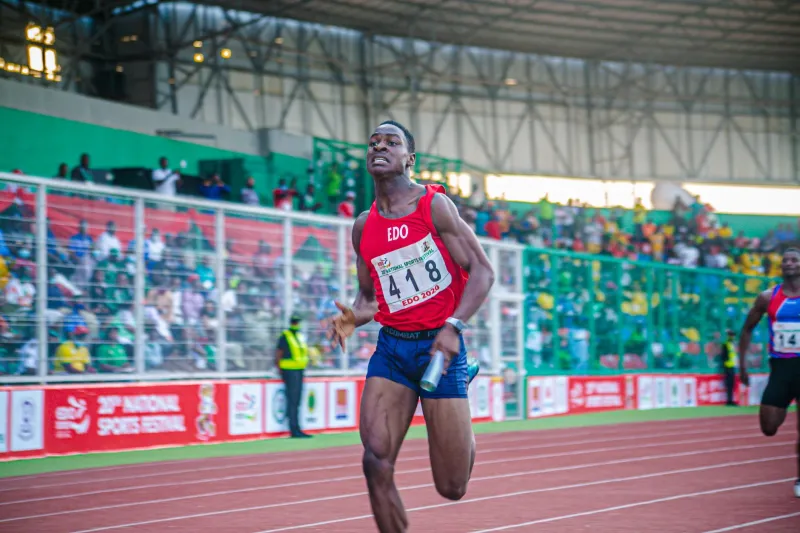
There's a particular kind of silence that falls over a relay team when their anchor runner takes the baton and the nearest competitor is already five meters up the track. Coaches stop mid-sentence. Teammates grip each other's arms. The crowd does that collective inhale thing.
And then — sometimes — something extraordinary happens.
Ask anyone who has competed in Modesto's relay circuit long enough and they'll have a story. A gap that looked impossible. A final 100 meters that rewrote the whole narrative. Wins that nobody in the stands — or on the team — fully believed were coming until they actually arrived.
So what makes those moments possible? And more importantly, what separates the anchor runners who pull it off from the ones who run hard but still come up short?
The Deficit Is Real. So Is the Noise in Your Head.
Let's be honest about something: falling behind heading into the anchor leg is genuinely hard. Not just physically — psychologically. You can train your legs all season, but nobody hands you a manual for the mental static that kicks in when you grab that baton already chasing.
Coaches in the Modesto area will tell you the first thing most anchor runners do wrong is change their race plan the moment they see the gap. Instead of running their race, they start running at the lead — throwing their pacing out the window and going out too hot in the first 100 meters.
"The instinct is to sprint immediately and close the distance fast," said one longtime relay coach who has worked with several Central Valley programs. "But that's almost always the wrong move. You burn the match before you need it, and now you're dying at the 300-meter mark while the leader is still running strong."
The smarter play, counterintuitive as it sounds, is disciplined patience. Lock into your own rhythm. Trust your training. Let the race come to you.
Easier said than done when you're staring at someone's back.
Belief Isn't Soft — It's Strategic
Here's something that doesn't show up in split times or race reports: the anchor runners who succeed in comeback situations almost universally describe a very specific mental state. Not blind optimism. Not rage. Something quieter and more deliberate.
Call it functional belief — the ability to hold onto the possibility of winning without letting that possibility destabilize your mechanics.
One anchor runner who competed in the Modesto area described it this way: "I stopped thinking about the gap and started thinking about my form. Arms, drive, breathing. I knew if I ran a perfect race, whatever happened, happened. But I also knew I couldn't run a perfect race if I was panicking."
That kind of compartmentalization is a skill, not a personality trait. And coaches who develop dominant relay programs spend real time building it — through practice scenarios, through post-race debriefs, through deliberately putting athletes in deficit situations during training so the feeling isn't foreign when it shows up in competition.
The Modesto relay culture, at its best, treats mental preparation as seriously as interval work. Because the physical tools mean nothing if the runner who has them falls apart the moment things get uncomfortable.
Positioning and the Art of the Gradual Close
Beyond mindset, there's genuine tactical intelligence that goes into a successful comeback leg.
Experienced anchor runners know that visible progress matters — both to themselves and, subtly, to the runner they're chasing. Closing steadily, even incrementally, shifts the psychological weight of the race. The leader starts hearing footsteps. Their form sometimes tightens. Their confidence, which was an asset when they held the lead, becomes a liability when it starts to erode.
Positioning matters too. Running in the lane directly behind a competitor rather than wide of them can create a drafting effect on windy days, conserve energy, and — perhaps most importantly — keep the pressure visible and constant. There's a reason experienced anchor runners talk about "hunting" rather than "chasing." The word choice isn't accidental. Hunting implies control. Chasing implies desperation.
The goal in the first half of the anchor leg is to close enough ground that the race becomes winnable in the final straight. Not to be tied at the 200-meter mark — just to be close enough that it's real. From there, the athlete with the strongest finish and the clearest head usually wins.
What the Team Does (and Doesn't) Do
One underappreciated element of comeback relay wins is the role of the three runners who've already finished their legs.
The instinct is to cheer wildly, which is fine. But experienced relay teams know that what they project to their anchor runner in that moment matters. Panic from the sideline feeds panic on the track. Calm, loud, specific encouragement — "You've got this, run YOUR race" — actually helps.
Coaches, too, have to manage themselves. An anchor runner glancing at their coach mid-race and seeing white-knuckled anxiety doesn't exactly unlock their best performance.
The team aspect of relay racing extends right through the final leg, even when only one person is running. The culture a program builds — the trust, the communication, the shared belief — shows up in how an anchor runner carries themselves when they're behind. Teams that run together, suffer together in practice, and talk honestly about failure and resilience tend to produce anchor runners who don't quit when things look bad.
That's not a coincidence. That's culture doing its job.
What Comeback Races Teach You
Ask athletes who have been part of a genuine relay comeback — where the gap was real, the win felt unlikely, and it happened anyway — and most of them will tell you it changed something.
Not just their confidence in races. Their confidence in general.
There's a transferable lesson buried in those moments: the scoreboard at the start of the final leg isn't the final word. Deficits are real, but they're not permanent. The race isn't over until it's over, and sometimes the person who believes that most clearly is the one who runs fastest when it counts.
In Modesto's relay community, those stories get told and retold. They become part of the fabric of what it means to compete here. They remind younger athletes — the ones just learning what relay racing is — that the whole point isn't just to run fast. It's to run together long enough to find out what you're actually made of.
And sometimes, you find out on the anchor leg, five meters behind, with everything on the line.
That's when it gets good.