Stop Sleeping on the Middle Legs: The Relay Positions That Actually Decide Races
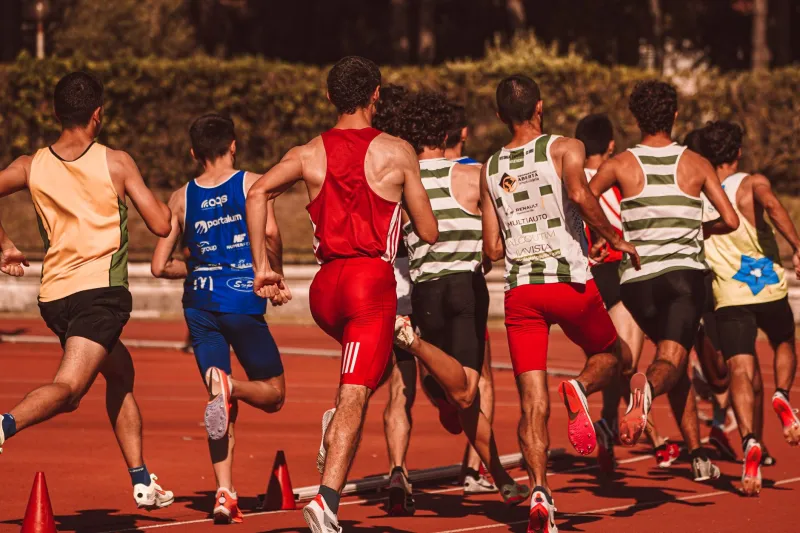
Let's be honest about something. When a relay squad gets together for the first time and positions get discussed, there's a pretty predictable power struggle. Your fastest athlete wants the anchor. Your most confident athlete wants the leadoff. And the two runners left standing? They get handed the middle legs like leftover pizza nobody really wanted.
It happens at every level — high school, club, open division. And it's been happening here in Modesto for as long as relay racing has been a thing. But a growing number of local coaches are pushing back hard on this logic, and their results are making people pay attention.
The argument is pretty simple: legs two and three don't just connect the race — in many cases, they decide it.
The Anchor Obsession Is Costing Teams Medals
There's a romance to the anchor position that's hard to argue with. You're the closer. The last one holding the baton. The person who gets to cross the finish line. Pop culture, highlight reels, and decades of relay tradition have all reinforced the idea that the anchor is the most important runner on the team.
But look at the data from competitive relay events and the story gets more complicated. Research on 4x100 and 4x400 relay performance consistently shows that time lost during exchanges — particularly the second and third exchanges — accounts for more race losses than anchor-leg speed differentials. In other words, it's not the closer who's blowing races. It's what happens in the middle.
A botched exchange between legs two and three can cost a team anywhere from 0.2 to 0.5 seconds in a sprint relay. In a competitive field, that's the difference between a podium finish and watching someone else's team celebrate.
What the Middle Legs Actually Demand
Here's where the conventional wisdom really falls apart. Most coaches assign middle legs based on one factor: who's the third or fourth fastest on the squad. Speed is the entire equation. But coaches who've been doing this long enough in Modesto will tell you that the middle legs require a very specific psychological profile that has almost nothing to do with raw pace.
Leg two athletes need to excel under transitional pressure — they're receiving the baton in a crowd, accelerating through a packed exchange zone, and often running the portion of the race where the competitive field is most tightly bunched. They need to be calm when it's chaotic, and they need to make quick adjustments if the incoming handoff isn't clean.
Leg three athletes face a different kind of challenge: they're the bridge between the middle of the race and the finish. By the time the baton reaches them, the team's position in the field is usually set — and they either need to hold it, defend against surging competitors, or make up ground before the anchor takes over. That requires tactical intelligence and emotional regulation under fatigue. It's a genuinely hard job.
Neither of those skill sets is the same as being fast. They're separate, learnable competencies — and teams that treat them as afterthoughts are leaving real performance on the table.
The Coaches Who Are Getting It Right
Talk to relay coaches around the Modesto area who've had consistent success, and a pattern emerges. The ones whose teams punch above their weight class almost universally say the same thing: they stopped assigning middle legs last and started assigning them first.
The thinking goes like this. Your anchor will get the baton near the finish line, likely with a lead or a close deficit, and their job is relatively defined. Your leadoff runner sets tone, but they're running fresh and without a baton handoff to receive. The middle legs, though, require athletes who can handle ambiguity — who don't need the glory of a closing sprint to stay motivated, who thrive on the invisible work of keeping a race alive.
When you identify those athletes first and build the rest of the lineup around them, the whole relay gets stronger. It's a counterintuitive approach, but the results speak for themselves.
Personality Over Pace: A Framework Worth Stealing
So how do you actually identify who belongs in the middle? Here's a rough framework that some Modesto coaches have started using during pre-season assessments:
Leg two candidates tend to be athletes who stay composed in crowded situations, recover quickly from small mistakes, and communicate well under stress. They're often not the loudest personality on the team, but they're reliably steady. Ask them to describe a moment when something went wrong mid-race and they'll tell you exactly what they did to adjust — not just what happened.
Leg three candidates are usually the strategic thinkers of the group. They're aware of where they are in the field at all times, they can pace themselves intelligently even when adrenaline is pushing them to go out too fast, and they have the mental toughness to hold form when their body is screaming to slow down. They're often the athlete who knows everyone else's splits as well as their own.
None of that is about speed. All of it is about character — and it's entirely identifiable if you're paying attention.
Rethinking What It Means to Be a Team Player
There's a cultural piece to this, too. Part of why middle legs get undervalued is that we've built a relay culture that celebrates individual moments — the dramatic anchor finish, the blazing leadoff split — over the collective architecture that makes those moments possible.
But real team players in relay running aren't necessarily the ones crossing the finish line. They're the ones who keep the race alive long enough for someone else to win it. They're the ones who eat a bad exchange and don't let it rattle the whole squad. They're the ones who run the leg nobody wanted and run it better than anyone expected.
In Modesto, we talk a lot about running together and winning together. That's not just something you put on a banner. It's a philosophy that has to show up in how you structure a relay — in how you value every position, not just the ones that get the highlight clips.
The middle legs aren't a consolation prize. They're the spine of your relay. Start treating them that way, and watch what your team can do.