Zero to Race-Ready: How Modesto Relay Teams Forge Real Chemistry in Two Months

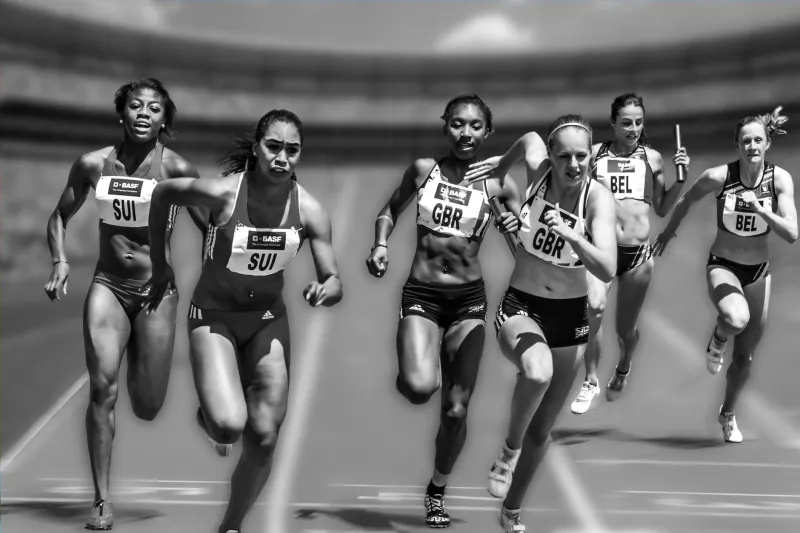
The first practice is always a little weird. Four athletes who may have nodded at each other in passing — maybe once, maybe never — show up to the track, lace up, and are suddenly expected to hand a baton back and forth like they've been doing it for years. Nobody quite knows where to stand. Communication is polite but stiff. And the exchange zone? Let's just say it needs work.
But here's the thing: eight weeks later, those same four runners can look like a unit that's been together since middle school. It happens here in Modesto more often than you'd think. The question coaches get asked constantly is how. How do you take strangers and turn them into stride partners before race season peaks?
Turns out, there's a real method to it — and it's less about raw talent than it is about intentional structure.
Week 1–2: Stop Running, Start Talking
Every experienced relay coach in the Modesto area will tell you the same thing: the biggest mistake new squads make is going straight into speed work before they've established basic communication norms. Trust doesn't start on the track. It starts in the conversation before practice even begins.
During the first two weeks, the priority should be getting athletes talking — about their strengths, their anxieties, and their preferred running style. Some coaches use a simple intake sheet that asks things like: Do you prefer detailed instructions or general guidance? How do you respond to criticism during a race? What's your go-to move when pressure spikes?
These aren't therapy questions. They're performance questions. When your second-leg runner knows that your leadoff athlete freezes under loud feedback, they adjust how they call out during an exchange. That kind of micro-awareness is the foundation of relay chemistry.
Actionable milestone for weeks 1–2: Every athlete on the squad should be able to name one specific strength and one honest challenge for each of their teammates. If they can't, keep talking before you start timing.
Week 3–4: The Drill That Changes Everything
Once the team has a basic read on each other, it's time to introduce what local coaches sometimes call the "blind trust exchange" — a baton drill where the outgoing runner is not allowed to look back. Ever.
It sounds simple. It's not. The first few attempts are chaotic. Runners hesitate. They peek. They slow down instinctively because something in the brain says I need to see what's coming. But that instinct is exactly what relay running has to override.
The drill forces incoming runners to be precise with their approach, their call, and their timing — because they know their teammate is running blind. And it forces outgoing runners to trust that precision completely. You can't fake that trust. You either develop it through repetition or you don't.
By the end of week four, most Modesto squads doing this drill consistently start to notice something shift. The exchanges get quieter. Cleaner. The athletes stop thinking about the handoff and start feeling it.
Actionable milestone for weeks 3–4: Run the blind trust exchange until the outgoing runner stops peeking on at least 80% of attempts. Time the exchanges separately from overall splits — the improvement there will be noticeable.
Week 5–6: Build the Race Narrative Together
This is the phase most teams skip, and it's a shame — because it might be the most powerful one. Around the midpoint of the eight-week window, the squad should sit down (off the track, ideally somewhere low-key like a picnic table at Graceada Park) and build a shared race narrative.
What does that mean? Basically, every runner walks through their leg out loud, in detail, while the rest of the team listens. Not just the mechanics — the emotions. What does the leadoff runner feel when the gun fires? What's going through the third-leg athlete's head when they're holding the baton and waiting for the handoff? What does the anchor do when they come out of the exchange zone and realize they're a half-step behind?
When athletes hear each other articulate the mental experience of their individual legs, something clicks. Suddenly the relay isn't four solo runs — it's one continuous story that each person is responsible for carrying forward. That reframe is huge.
Actionable milestone for weeks 5–6: Each athlete should be able to describe what their teammate to the left and right is experiencing during the race, not just what they themselves are doing.
Week 7–8: Simulate Pressure, Not Just Speed
The final stretch before competition isn't just about sharpening splits. It's about stress-testing the trust you've built. Coaches who get this right deliberately introduce chaos into practice — a late start call, a crowded exchange zone with other teams running simultaneously, a change in leg assignments with 24 hours' notice.
Why? Because real races are messy. The relay that wins isn't always the fastest one — it's the one that holds together when things go sideways. By manufacturing low-stakes chaos in practice, you're building the squad's capacity to stay connected and composed when it counts.
One drill that works well here: run a full relay simulation where the coach calls out a surprise change to the baton exchange order mid-warmup. Athletes have to adapt, communicate on the fly, and execute without complaining. It's uncomfortable. It's also incredibly effective.
Actionable milestone for weeks 7–8: Run at least two full pressure simulations where something unexpected changes. If the team stays composed and communicates cleanly through the disruption, they're ready.
The Finish Line on Team Trust
Eight weeks isn't a long time. But it's enough — if you use it deliberately. The relay teams that build real trust quickly aren't the ones with the most talented runners. They're the ones with coaches and captains who understand that chemistry is a skill, not an accident.
Here in Modesto, we've seen squads go from awkward handshakes to race-day fist bumps in exactly that window. The process isn't magic. It's just intentional. And if your team commits to each phase — the conversations, the drills, the narrative-building, the pressure simulations — you'll be shocked at what four relative strangers can accomplish together when the starting gun fires.
Run together. Compete together. Win together. That's not just a motto — it's a training plan.