Four Runners, One Heartbeat: The Secret Ingredients Behind Modesto's Strongest Relay Squads
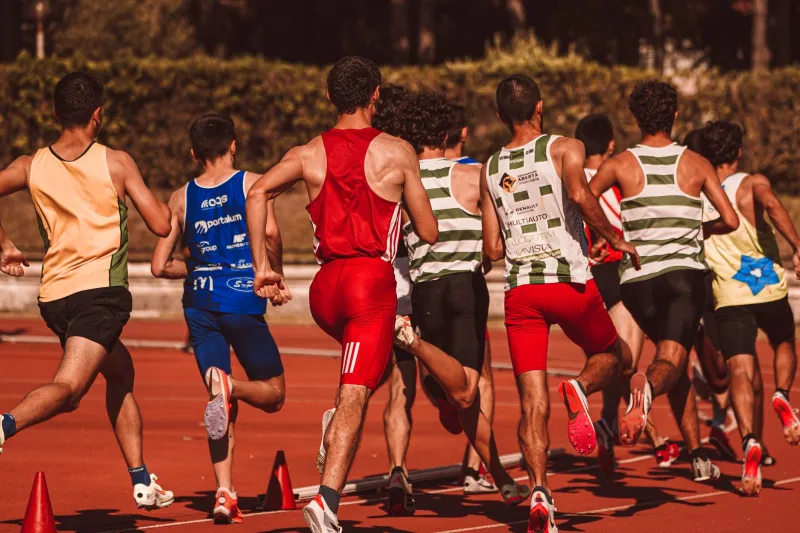
There's a moment in every relay race — usually somewhere around the second exchange zone — where everything either clicks or falls apart. The incoming runner is flying, arm extended, the outgoing runner accelerates on cue, and for just a fraction of a second, two athletes share the same baton, the same breath, the same goal. When it works, it's almost poetic. When it doesn't, months of training can evaporate in an instant.
Here in Modesto, relay racing isn't just a track event. It's a community tradition. From youth club teams to high school powerhouses competing at the Central Valley level, local squads have spent years figuring out what separates a relay team that merely competes from one that genuinely contends. And almost universally, the answer isn't who runs the fastest split.
It's everything else.
More Than a Collection of Fast Legs
Coach Maria Delgado has been coaching track at a Modesto-area high school for over a decade. Her 4x400 squad has consistently placed at regional meets, and she's refreshingly blunt about what she looks for when assembling a relay team.
"Every year I've got kids who run great individual times and assume they'll be on the relay," she said during a recent practice at their home track. "But I've seen a 52-second quarter-miler make a relay slower because they can't function as part of a unit. The mindset is completely different."
That mindset shift — from individual competitor to collaborative contributor — is the foundation of every successful relay squad Delgado has coached. She spends the first few weeks of relay training not running exchange drills, but talking. Team meetings. Film sessions. Honest conversations about each runner's strengths, weaknesses, and comfort under pressure.
"Trust gets built before anyone touches a baton," she said. "If my anchor doesn't believe that the third-leg runner is going to give them something to work with, the whole thing falls apart mentally."
The Psychology of the Handoff
Ask any relay veteran about their most nerve-wracking moment in competition, and most will point to the exchange zone rather than the finish line. It makes sense — a runner can control their own performance, but a handoff requires absolute synchronization with another human being moving at top speed.
Jordan Reyes, a former Modesto sprinter who competed collegiately after graduating from a local high school, described the psychological weight of being a third-leg runner on a struggling team.
"We were behind after the first two legs at a big invitational," Reyes recalled. "I remember thinking, just don't drop it, just don't drop it. And that's the worst thing you can think. The anxiety of not wanting to mess up is what makes you mess up."
Reyes said the turning point came when his coach reframed the handoff entirely. Instead of thinking about the baton as something that could be dropped, they started treating it as a signal — an incoming message from a teammate that said, I did my part, now do yours.
"Once it became about continuing something instead of receiving something, the pressure felt different. Lighter, almost."
Sports psychologists who work with competitive track programs echo this kind of reframing. The handoff is inherently a moment of vulnerability — one runner slowing down, another accelerating, a narrow window for physical contact. Building mental routines around that moment is just as important as the physical mechanics.
Breaking Down the Technical Side
Of course, the mental game only takes you so far. The mechanics of a relay exchange are specific, learnable, and — according to coaches here — chronically undertrained.
The two primary exchange methods used at the high school and collegiate level are the upsweep and downsweep techniques. In the upsweep, the incoming runner places the baton into an upward-facing palm; in the downsweep, the baton is pushed down into a downward-facing hand. Neither is universally superior — it often comes down to what a team practices most consistently.
Coach Delgado's teams primarily use the upsweep for her 4x100 squad. "Consistency is everything," she emphasized. "I don't care which method you choose. I care that you do it the same way every single time, at every single practice, until it's muscle memory."
The exchange zone itself — a 20-meter window — is another area where teams leave time on the table. Many younger teams make the mistake of completing the handoff too early in the zone, essentially wasting free acceleration distance. Experienced relay squads use check marks — small tape indicators on the track — to calibrate exactly when the outgoing runner should begin accelerating based on the incoming runner's position.
"We spend whole practices just on check marks," said Delgado. "It sounds boring, but those tiny adjustments are where races are won."
What Practice Actually Looks Like
For Modesto relay teams that are serious about competing, practice looks a lot less glamorous than the race-day atmosphere might suggest. It's repetitive, detail-oriented work — and that's entirely the point.
A typical exchange drill session might involve running the same 4x100 handoff sequence fifteen to twenty times, with coaches watching from multiple angles, occasionally filming on phones for immediate playback review. Runners rotate through different legs to understand what each position demands. Even the anchor runner practices receiving the baton, not just running the final stretch.
Beyond the technical drills, smart relay programs also invest time in what some coaches call "chaos training" — intentionally introducing variables to simulate race-day stress. That might mean running exchanges while slightly fatigued, practicing with runners of different heights and arm lengths, or simulating a slightly botched incoming handoff to see how the outgoing runner adapts.
"In a race, something unexpected almost always happens," Reyes noted. "If you've only ever practiced the perfect scenario, you're not really prepared."
The Glue That Holds It Together
At the end of the day, the relay teams in Modesto that consistently perform — the ones that make it to state qualifiers, that win invitationals, that leave everything on the track — share a common trait that goes beyond technique or talent.
They genuinely like running together.
It sounds simple, maybe even obvious. But there's a real difference between a group of fast individuals who happen to share a baton and a team that has bought into each other's success. The former can be assembled in an afternoon. The latter is built over a season, through shared early morning practices, through mistakes made and corrected, through the kind of low-stakes laughter that happens when a drill goes sideways and everyone just resets and tries again.
"Chemistry isn't something you can manufacture," Coach Delgado said, wrapping up a practice as the afternoon sun dipped toward the Central Valley horizon. "But you can create the conditions for it. That's what coaching relay is really about."
At Modesto Relays, we believe those conditions start right here — in this community, on these tracks, with athletes who run together, compete together, and ultimately win together. The baton doesn't care how fast you are individually. It only moves forward when the team moves as one.