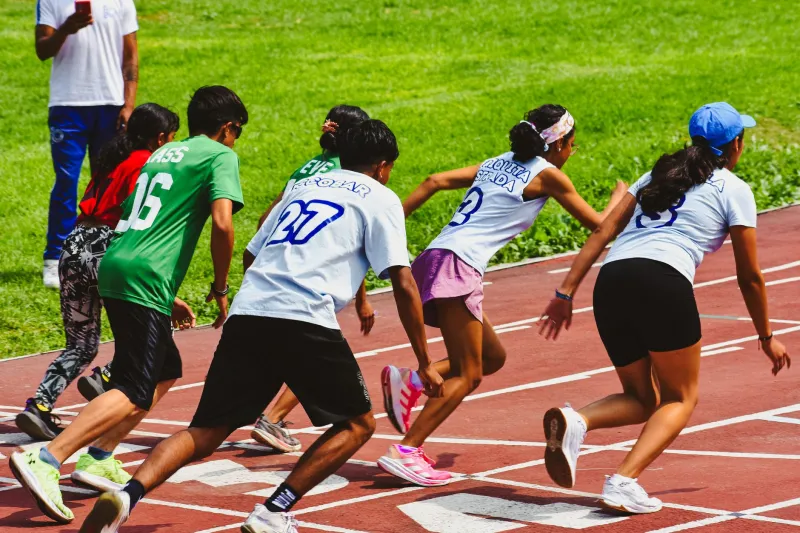
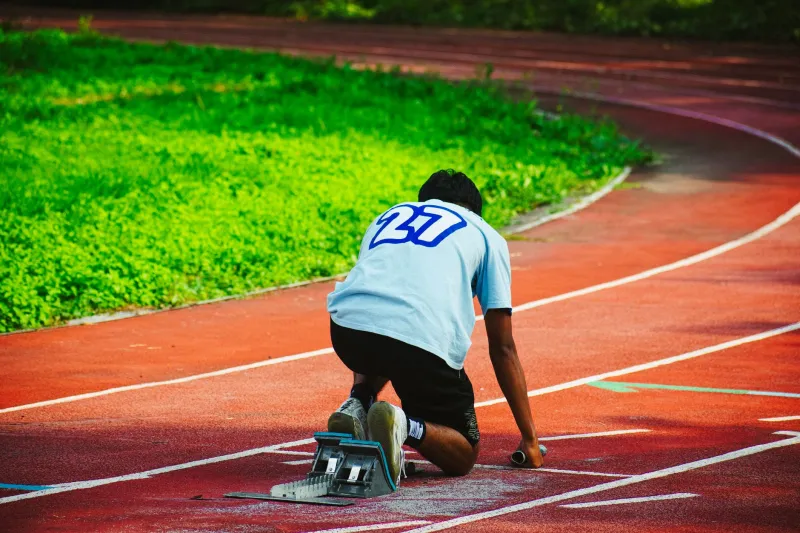
Wired to Win Together: How Relay Racing Rewires Your Brain for Life
Ask any former relay runner in Modesto what they miss most about their racing days, and they'll rarely say the medals. More often, it's something harder to name — a feeling, a rhythm, a way of moving through the world that the sport quietly installed in them. That's not nostalgia talking. As it turns out, there's real science behind why relay racing leaves such a lasting imprint, and the athletes who've competed here have the stories to back it up.
What's Actually Happening in Your Head
When you run as part of a relay team, your brain isn't just managing your pace and your breathing. It's doing something far more complex. Research in social neuroscience shows that synchronized physical activity — people moving together toward a shared goal — triggers a measurable release of oxytocin, the same bonding hormone associated with trust, empathy, and long-term social connection. Endorphins get a lot of the credit in running culture, but oxytocin is the quieter force doing the deeper work.
There's also something called "neural coupling" at play. When teammates train together repeatedly, their brains begin to mirror each other's anticipatory patterns. You start reading your anchor's stride before she hits the exchange zone. You sense when your second leg is carrying extra tension in his shoulders. This isn't coincidence — it's your nervous system adapting to a team environment. And once that adaptation happens, it doesn't just disappear when the season ends.
Psychologists who study athletic identity have found that team sport participants — especially those in high-trust, high-stakes roles like relay racing — tend to carry what researchers call "collaborative cognitive frameworks" long after they stop competing. In plain English: relay runners learn to think in terms of shared outcomes, and that habit sticks.
The Modesto Moment That Changed Everything
Marcos Delgado ran the third leg for a club relay team out of Modesto for three seasons before a knee injury ended his competitive career in his mid-twenties. He'll tell you the sport didn't just change his body — it changed the way he manages people.
"I work in logistics now," he says, leaning back in his chair at a coffee shop off McHenry Avenue. "And I think about handoffs constantly. Like, literally. When I'm transferring a project to another team, I'm thinking about the exchange zone. Did I set them up to accelerate, or did I hand them a mess and make them slow down?"
That mental model — the exchange zone as a metaphor for every transition in life — keeps surfacing in conversations with Modesto relay athletes. It's not something they were taught explicitly. It's something the sport built into them through repetition and consequence. A bad handoff costs your team. A clean one creates momentum. That's a lesson that travels.
Tamara Osei, who ran anchor for a high school relay program in the Central Valley before going on to coach youth track, describes a different kind of shift — one rooted in accountability without shame.
"In relay, you can't hide," she says. "If you ran a bad split, everyone knows. But you also can't spiral about it, because the race is still going. You learn to process failure really fast and stay present for your team. That skill? I use it every single day as a coach, as a mom, as a person."
The Bonding Science Behind "Running Together"
The phrase on our banner — Run Together. Compete Together. Win Together. — isn't just a motto. It's a description of a neurological process.
Studies from the University of Oxford's Institute of Cognitive and Evolutionary Anthropology found that people who engage in synchronized physical exertion report significantly higher pain thresholds and stronger feelings of social bonding than those who exercise alone. The researchers call it the "bonding effect of synchrony," and relay racing is essentially its purest athletic expression. Every practice, every timed exchange, every race where four people breathe and push and recover as one unit is depositing something into a long-term account in your brain.
This explains why relay alumni in Modesto tend to show up in unexpected places — coaching youth programs, organizing neighborhood events, mentoring younger athletes at the track. The prosocial wiring that relay builds doesn't idle. It looks for outlets.
Spillover Into Careers, Families, and Community
It would be easy to dismiss this as feel-good anecdote, but the pattern is consistent enough to be worth taking seriously. Relay runners in Modesto's competitive community describe a specific kind of professional advantage: comfort with interdependence.
In a culture that often glorifies individual achievement, knowing how to subordinate your ego to a team outcome is genuinely rare. Former relay athletes describe walking into job interviews and group projects with a different baseline — less threatened by collaboration, more attuned to group dynamics, quicker to recognize when a team needs to recalibrate.
"I think relay taught me that my performance affects other people in a direct, immediate way," says Delgado. "That's not abstract. You feel it. And once you feel it, you can't unfeel it."
At home, the effects are just as tangible. Osei talks about how relay reshaped her relationship with her kids — specifically, her instinct to help them process setbacks without catastrophizing. "You don't get to fall apart on the relay team. You get back up and you go again. I bring that energy to parenting."
And in the broader Modesto community, former relay athletes show up with a team-first orientation that's hard to manufacture. They volunteer. They recruit. They stick around long after their competitive days end because the sense of belonging relay created doesn't have an expiration date.
What This Means for How We Build Programs
Understanding the lasting neurological and psychological impact of relay racing changes how we should think about what programs like ours are actually doing. We're not just producing faster runners. We're producing people who are better wired for cooperation, resilience, and connection.
That's a serious responsibility — and a serious opportunity. When we invest in relay culture in Modesto, we're not just investing in race results. We're investing in the kind of people this community will have in its schools, its workplaces, its neighborhoods, and its families for decades to come.
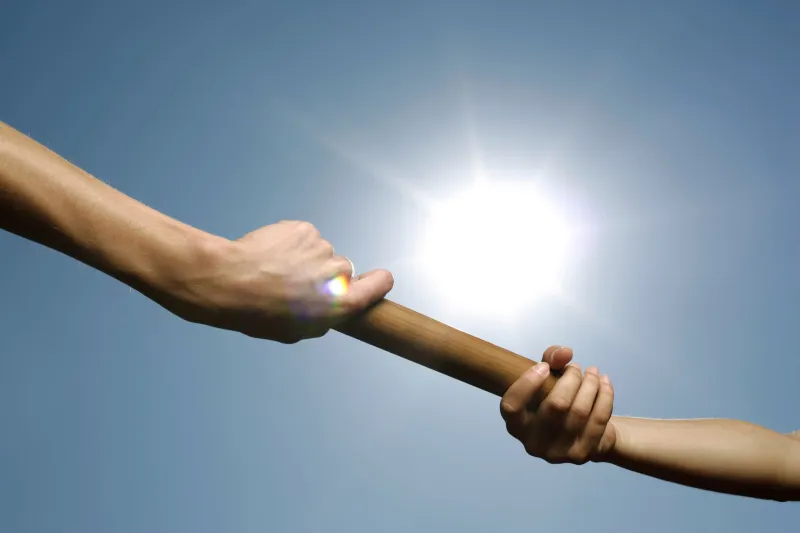
The baton gets passed. So does everything it teaches you.
If you're new to relay racing and wondering whether it's worth the commitment, consider this: the miles you put in on the track are only part of what you're building. The rest of it — the patience, the trust, the instinct to lift your team instead of just yourself — that's the stuff that follows you home. And if the athletes who've been through it in Modesto have anything to say about it, you'll be glad it did.