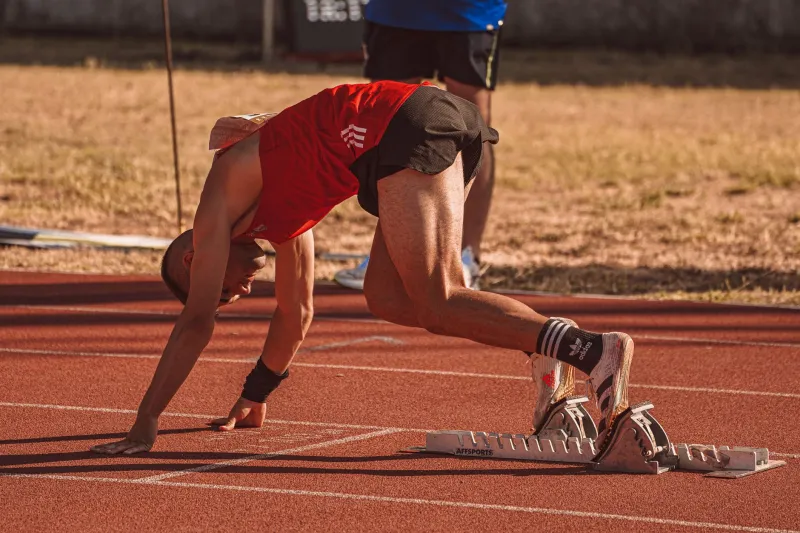
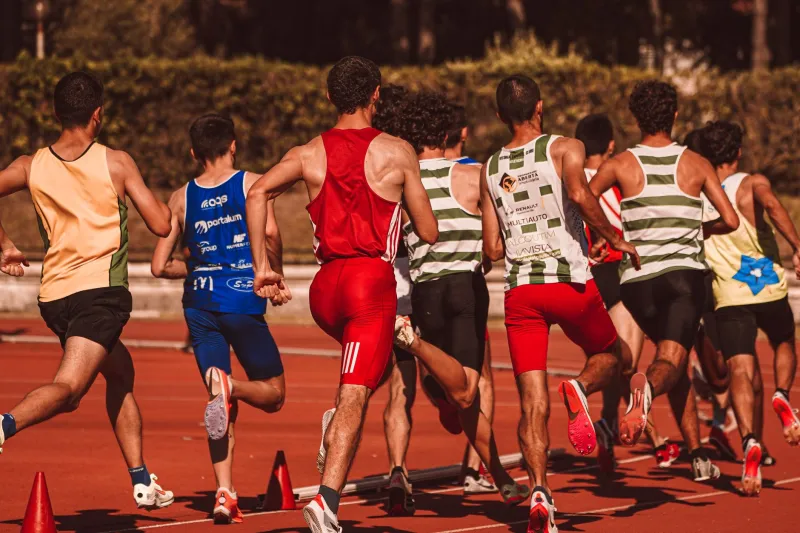
The Weight of the Final Leg: What It's Really Like to Be Your Team's Last Hope
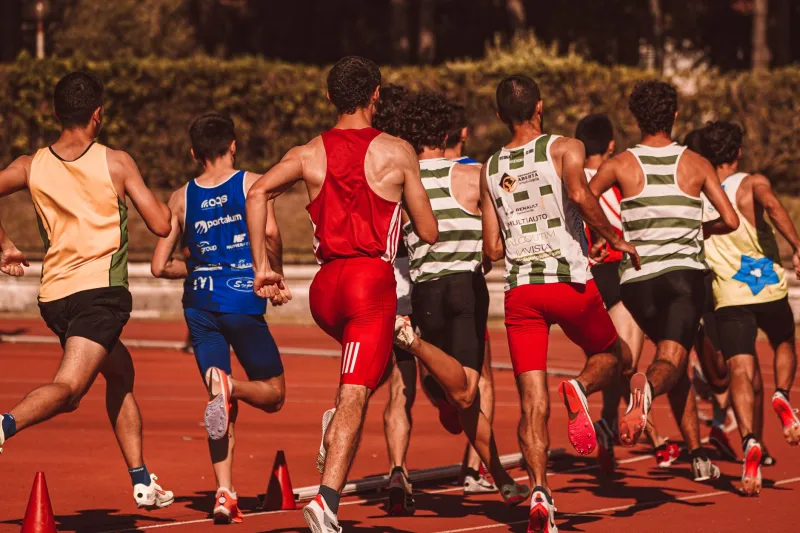
The baton arrives and everything changes.
In the fraction of a second it takes to feel that stick land in your palm, you already know. You know whether you're ahead or behind. You know whether your teammates gave you a gift or a mountain. And you know that whatever happens next — the glory, the heartbreak, the photo finish — it ends with you.
This is the anchor position. And if you've never run it, it's hard to fully explain what it does to a person.
Not Just the Last Leg — A Different Race Entirely
Every leg of a relay carries its own pressure. The leadoff runner sets the tone. The middle legs maintain it. But the anchor isn't just maintaining or setting — the anchor is deciding. There's a finality to the position that none of the other legs share.
When you're running legs one through three, you can hand off to someone. You can pass the responsibility forward. The anchor runner has no such option. Whatever they do with what they receive, that's the result. Full stop.
For many Modesto relay athletes, this reality hits differently depending on what kind of baton they're receiving. And those two scenarios — inheriting a lead versus inheriting a deficit — create two entirely separate psychological challenges.
When You're Out Front: The Terror of Holding On
You'd think receiving a lead would be the easy version of anchoring. You're ahead. Just don't lose it. Simple.
It's not simple. Not even close.
Running with a lead activates a particular kind of anxiety that's hard to describe until you've felt it. Every step becomes a potential mistake. You're suddenly hyperaware of footsteps behind you — real or imagined. You can hear the crowd react to someone closing ground, and you can't always tell if it's about you. The instinct to look back is almost overwhelming, even though every coach in the world will tell you it costs time and breaks stride.
"The lead can make you conservative when you need to be aggressive," said one Modesto athlete who's anchored multiple relay teams over the past three years. "You start protecting instead of racing, and that's when people catch you."
The mental discipline required to race when you're in front — not just survive — is something most anchor runners have to consciously train. It means trusting your preparation more than your instincts. It means running your race, not the race you imagine your competitors are running behind you.
When You're Behind: The Math of Comeback Runs
The deficit situation is its own beast. You receive the baton behind. Your team is counting on you to close the gap, maybe even to win. The math is right there in front of you: seconds per meter, how fast you need to go, whether it's even possible.
Here's the trap most anchor runners fall into: they go out too hard, too fast, trying to make up ground in the first 100 meters. It feels like urgency. It feels like heart. But physiologically, it often means they're gassed before the back stretch, and any ground they gained gets surrendered in the final turn.
Experienced anchor runners describe learning to process a deficit differently. Not as a catastrophe, but as a target. "I had to stop thinking about what my teammates lost and start thinking about what I could actually do," one Modesto athlete explained. "Once I stopped doing the math in my head and just ran, I got better."
There's also the emotional dimension of a comeback run that doesn't quite make it. When you leave everything on the track and still come up short, that can feel deeply personal — even when it isn't. The best anchor runners develop a kind of emotional compartmentalization: full commitment during the race, genuine processing afterward, and the ability to separate their effort from the outcome.
The Loneliest Position on a Team Sport
Here's the irony at the heart of the anchor role: relay racing is one of the most team-oriented events in all of athletics, and yet the anchor runner's final stretch is one of the loneliest experiences in sport.
Your teammates are done. They've run their legs, they're on the infield, and there's nothing they can do for you now. The coaches are watching. The crowd is watching. But you're out there alone, running a race that belongs entirely to you in a sport that's supposed to belong to everyone.
The athletes who thrive in this position tend to have made a kind of peace with that paradox. They love their team deeply — that love is actually fuel — but they've also built a self-contained mental space where they can perform independently when they need to.
Practical Tools Modesto Anchor Runners Use
So how do you actually prepare for this? A few approaches have emerged from conversations with local athletes and coaches.
Pre-race visualization is almost universal among experienced anchor runners. They mentally rehearse both scenarios — receiving a lead and receiving a deficit — so that neither one is a shock when it arrives. The goal is to make the emotional experience of the handoff feel familiar before it happens.
Controlled breathing in the exchange zone is something coaches increasingly teach. The window between receiving the baton and hitting full stride is brief, but it's a moment where anxiety can spike. Athletes who've learned to take one deliberate breath in that instant report feeling more grounded in the opening meters.
Focusing on process over outcome sounds like a cliché, but it holds up under pressure. Anchor runners who think about their form, their breathing, and their lane — rather than the scoreboard or the competition — tend to execute more consistently than those who run emotionally.
And perhaps most importantly: the post-race debrief. Whether the result is good or bad, anchor runners who talk through the experience — with coaches, with teammates — process it better and carry less of it into the next race.
What It Means to Be Trusted With the Last Leg
For all its weight, the anchor position is also an honor. Your team chose you for this. That's not a burden — or it doesn't have to be. It can be a source of confidence, a reminder that the people who know you best believe you can handle what's coming.
Modesto's relay culture understands this. The teams that compete well over time aren't just the ones with the fastest anchors. They're the ones where the anchor runner knows, without question, that their teammates gave everything before the baton arrived — and where that knowledge turns pressure into purpose.
Run together. The last leg is yours. Make it count.