Fast Alone, Slow Together: Why Your PR Doesn't Mean What You Think It Does in a Relay
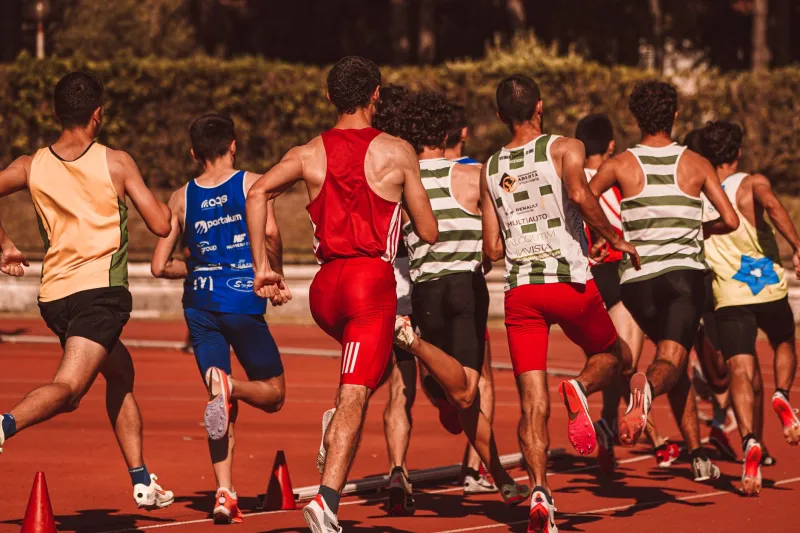
Here's a scenario that plays out more often than coaches like to admit. A relay team lines up with four runners who each own impressive personal records. On paper, the math looks great. Add up the solo times, subtract a little for relay momentum, and you're staring at a potential podium finish. Then the race happens — and the result doesn't look anything like the spreadsheet.
This isn't bad luck. It's the relay paradox, and understanding it might be the most important thing a competitive runner in Modesto can do before their next race.
The Numbers Lie (At Least a Little)
A personal record is a perfect snapshot of one thing: what you can do under ideal conditions, running your own race, at your own pace, with no external chaos to manage. It's a useful number. But it measures a completely different skill set than relay racing demands.
In a solo race, you control the variables. You know your start position. You warm up exactly how you want. You hit your splits based on feel. Nobody is handing you anything mid-stride, and nobody is depending on you to deliver a baton with clean mechanics while your heart rate is spiking at 185 beats per minute.
Relay racing strips all of that away. And what's left behind — the actual performance — depends on a set of abilities that a solo PR simply doesn't measure.
Adrenaline Is Not Your Friend Here
One of the most overlooked factors in relay underperformance is the adrenaline spike that comes with the handoff zone. Even experienced runners describe the moment before receiving the baton as a different kind of intensity than anything they feel at the start of a solo race. The crowd noise, the incoming runner, the urgency of not dropping the stick — it all hits at once.
What happens physiologically is that many runners go out too hot in the first 50 meters of their leg. They blow their pacing strategy before they even realize it. By the time they hit the back stretch, the legs that felt electric at the exchange zone are starting to feel heavy. The split suffers. And because relay legs are short, there's no time to recover and recalibrate.
Solo runners who have never had to manage that specific adrenaline cocktail are the most vulnerable to it. They're fast, sure. But they haven't trained for the mental discipline of receiving a baton at full sprint and immediately locking into controlled, sustainable pace.
Pack Running Changes Everything
Another element that solo times don't account for is the reality of running in a pack — or more accurately, the chaos of being near other runners in a relay race who are all navigating their own exchanges and pace adjustments.
In a solo 400 or 800, you pick your lane and run your race. In a relay, you might be weaving through traffic during an outgoing leg, dealing with a slower runner in your path at the exchange zone, or getting boxed in during a leg that requires tactical positioning. None of that shows up in a PR.
Modesto's more experienced relay coaches will tell you that the runners who adapt best to this chaos aren't always the fastest on the roster. They're the ones with strong situational awareness — the ability to read what's happening around them, make quick decisions, and maintain composure when the race doesn't go according to plan.
Why Consistency Beats Raw Speed
So what does predict relay success, if not individual PRs? Consistency, first and foremost.
A runner who clocks 50.5 seconds every single time they run a relay leg is more valuable to a squad than someone who occasionally runs 48 seconds but just as often runs 52 when the conditions aren't perfect. Relay races are won on averages, not peaks. One blown leg can erase everything the other three runners built.
Coaches who build strong relay programs here in Modesto spend a significant portion of training time on exactly this — creating conditions in practice that mimic the unpredictability of race day. That means simulated exchanges under fatigue, back-to-back interval efforts that force runners to hold pace when their bodies are screaming to slow down, and regular time trials that track consistency over multiple attempts rather than chasing single-effort bests.
The goal isn't to make fast runners slower. It's to make fast runners reliable.
The Handoff Multiplier
There's one more piece of the puzzle that pure speed metrics miss entirely: the exchange. A clean, well-timed baton pass between two runners who have practiced together extensively can shave real time off a relay split — sometimes more than an extra tenth of a second in raw speed would add.
Conversely, a fumbled or mistimed exchange can cost a team a race even when all four legs are run well individually. The handoff is a skill that exists completely outside of solo performance, and it requires hours of repetition to execute cleanly under race pressure.
This is why relay teams that train together consistently — not just assembled at the last minute from the fastest available individuals — almost always outperform their paper potential. The chemistry of the exchange zone is built over time, through repetition and trust.
What Smart Relay Runners Do Differently
If you're serious about improving your relay performance, start by separating your identity as a solo runner from your identity as a relay runner. They're related, but they're not the same thing.
Focus on your ability to receive a baton at full sprint and lock into pace immediately. Work on your mental reset between the chaos of the exchange and the controlled execution of your leg. Practice running in close proximity to other athletes without losing your form or your focus.
And honestly? Stop obsessing over your PR. It's a good number to have, but it's not the number that matters most when you're running for your team.
The relay paradox is real — and the runners who figure that out early are the ones who make their squads better, race after race, season after season. That's what running together is actually about.